In today’s specialty coffee industry, sustainability has become fundamental to the way modern roasters and cafes think, operate and grow. For Social Espresso Coffee Roasters on Queensland’s Gold Coast, it also means considering the equipment behind the bar and how to keep it working for as long as possible.
Since its early days, Social Espresso has taken a hands on approach to maintaining and refurbishing its own La Marzocco machines, extending their working life and, in the process, building a deep understanding of the equipment.
It’s an approach that speaks to La Marzocco’s Built for Life philosophy: creating quality equipment designed for a long working life, with serviceability and ongoing support helping it perform for years to come.
We caught up with Mitch from Social Espresso to talk about the company’s Gold Coast roots, its approach to sustainability, his love for the Linea PB, and why giving existing machines a new lease on life has been part of the Social Espresso story from the beginning.
Tell us about Social Espresso. How did it start?
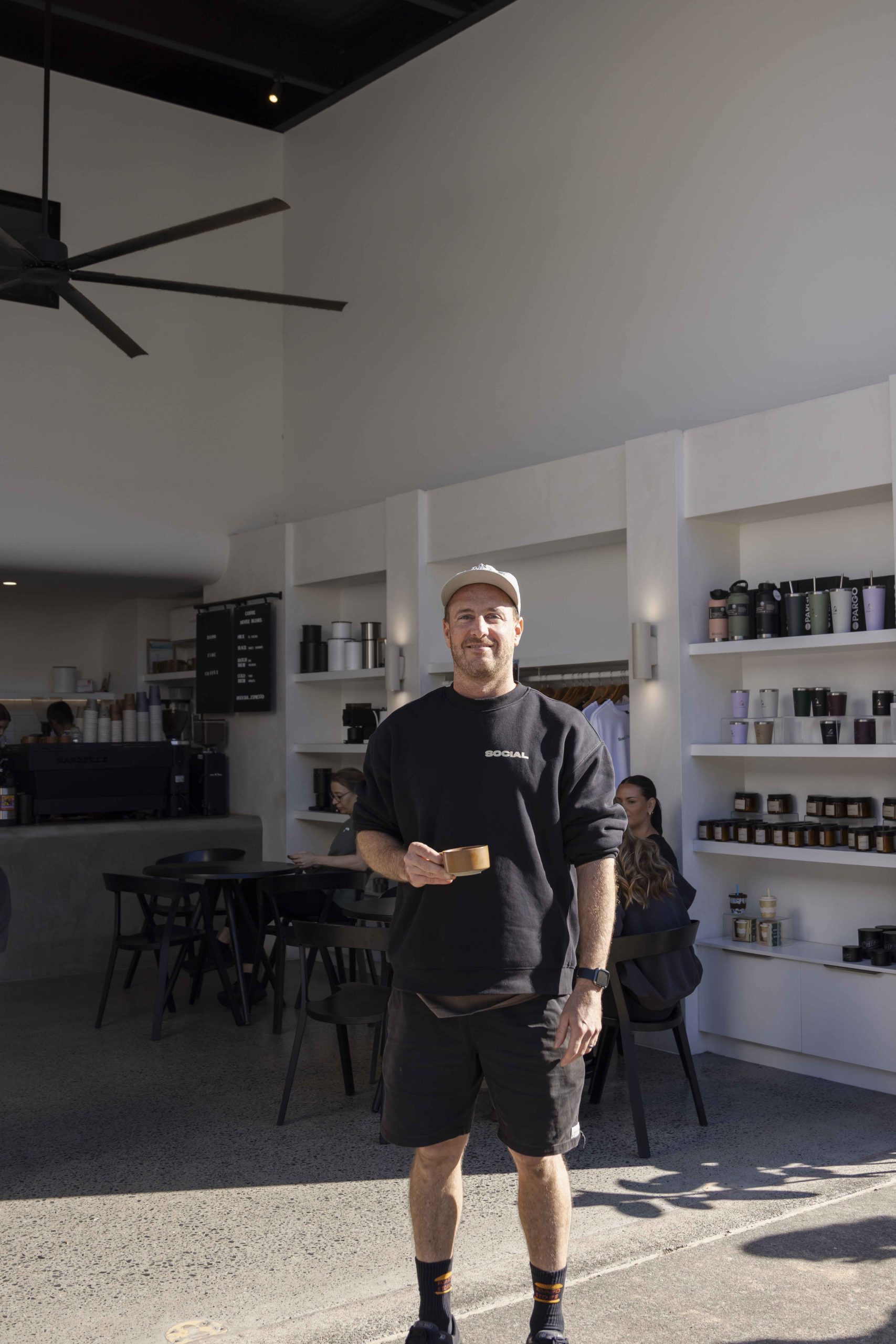
My wife and I first moved here from the West Coast about 12 years ago. I was working as a barista prior to that, we moved over here for my wife’s job, and then I started working as a barista here, and I was pretty keen to start my own thing. So I jumped on Gumtree at the time, which is what you did a long, long time ago, and I was actually looking for a small café or a lease, something that I could sign on or purchase, and then I found this tiny little roasting company that was for sale on there. I didn’t know anything about roasting, but I went all in and gave it and crack. So we purchased Social Espresso, it was a tiny little company, the guy was working out of his garage at the time, and I just think he couldn’t grow it any further so he passed it on to us and from there, we hit the ground running.
I was working out of our garage to start with, we had two wholesale accounts doing about 80kg a week, which was pretty minor at the time, and then we leased our first warehouse which was across the road from this one here. We rented 3×3 meter squared section of the warehouse because that’s all we could afford. We opened up our first little coffee shop, I think the whole fit out cost me around $2,000 because that’s all we had.
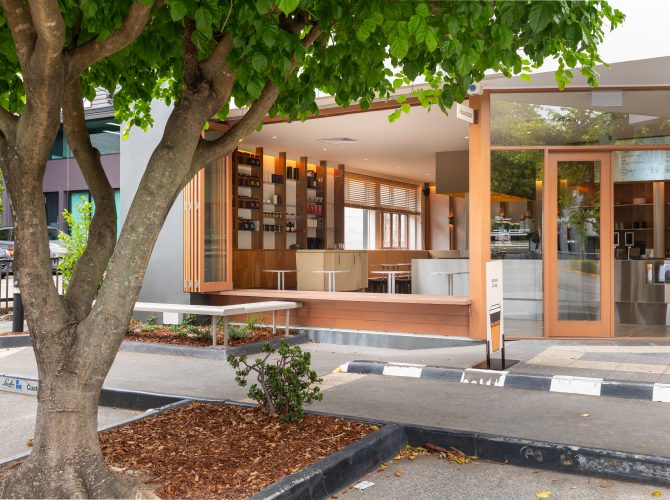
For our bench I think we used fence panelling from bunnings because that was the cheapest timber you could buy at the time, and then we opened up and serving the community out here. From there, my wife joined the team. I was getting too busy doing café in the morning, deliveries in the afternoon, coffee training after that, so she jumped on board and since then our team has grown and grown. Four years ago we purchased this factory here and built our dream factory. It’s gone from strength to strength, the team has grown a lot, and the whole company has really gone nuts on the Gold Coast.
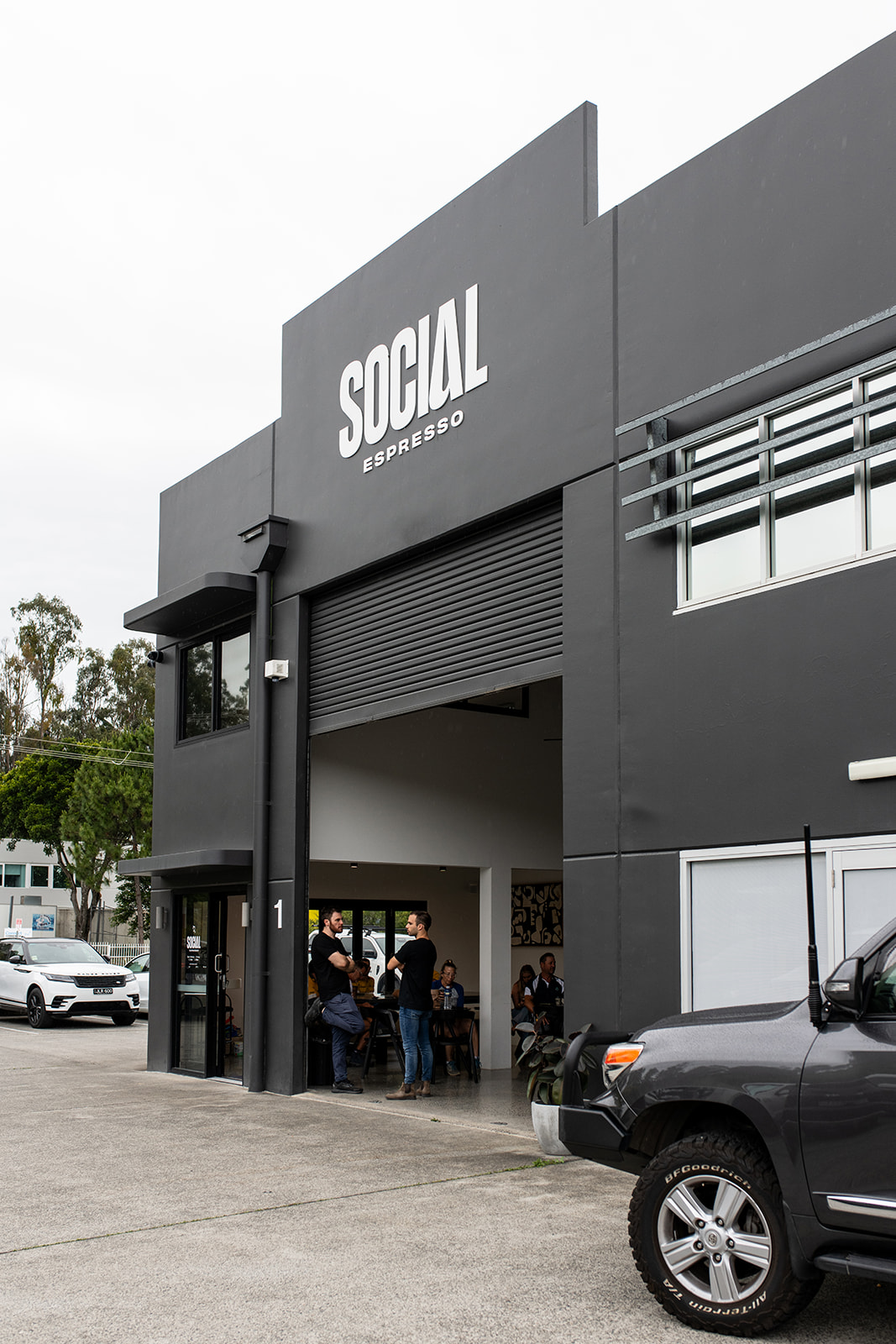
What does sustainability mean to Social Espresso beyond sourcing coffee?
For us, sustainability means we do our best in every way to be as sustainable as we can. For instance, we have compete solar and batteries here, we are pretty much off grid at this factory, which is awesome. All our packaging is compostable, if there was a bit more government policy it would be easier for us to do more. We work with a non-profit organisation called see the ground that composts all of our coffee grounds. We do as much as we can, basically.
Talk us through your choice of the Linea PB. What made it the right machine for Social
Espresso?
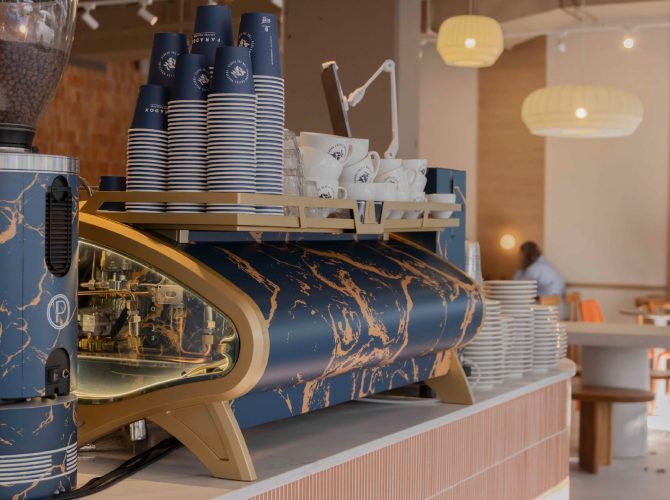
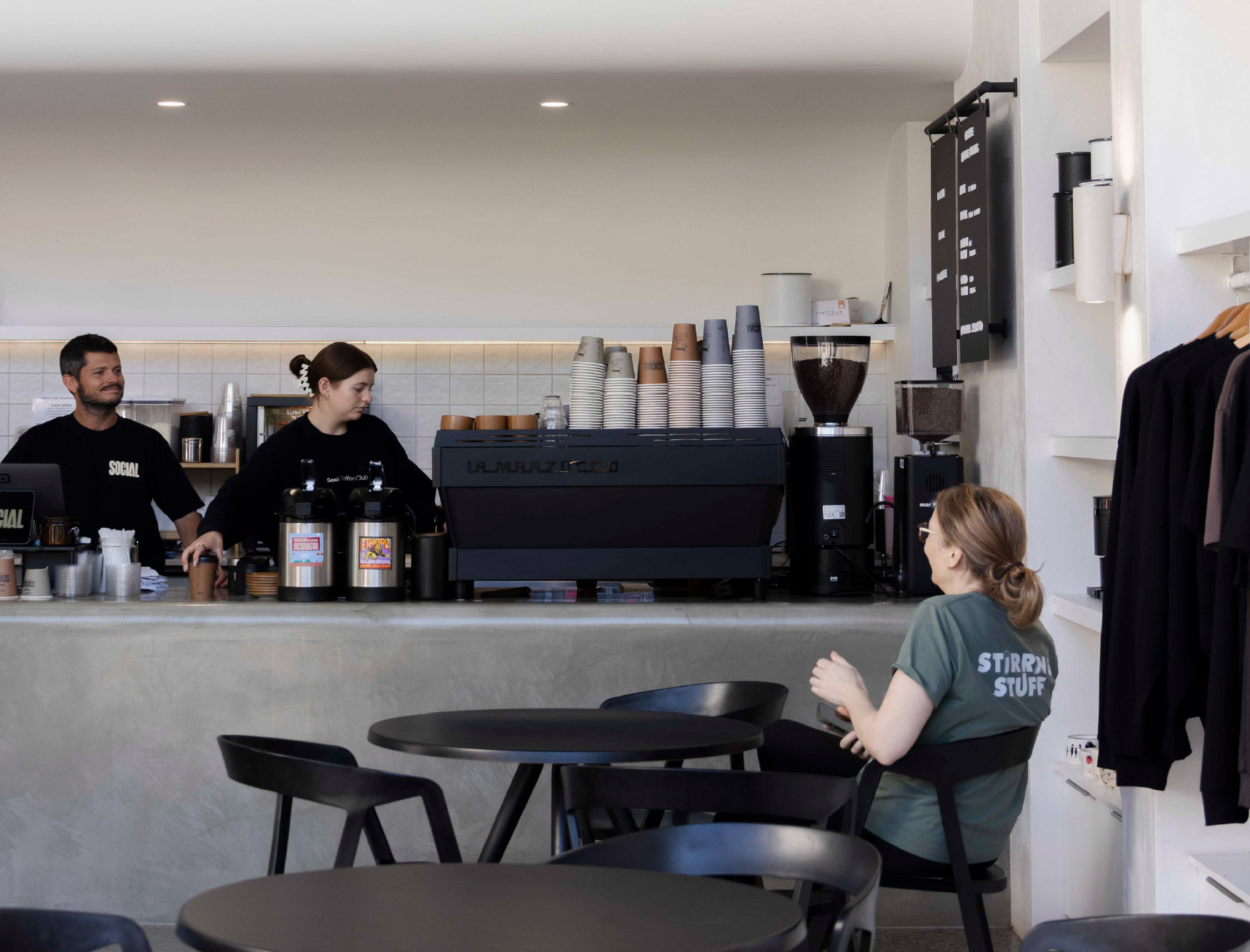
My choice of machine would have to be the La Marzocco PB. Probably 95% of our customers have a Linea PB. I think they’re bulletproof, we’ve got cafes that can punch out 100kg a week on a PB without breaking a sweat, and they’re really nice to fix. At Social Espresso we do 95% of our own technician work, so if there’s an issue, they’re super, super simple to fix. Customisable, really easy to make them look sharp. I just think they’re all round a great machine.
Because the Linea PB hasn’t changed much for a very long time, there’s only been minor adjustments or hardware updates, but they’re pretty similar to how they were when they first started. That’s great for us because we can carry spare parts in our vans and in our workshop and be ready to fix anything when we need to, which makes life a lot easier.
What drew you to extending the life of your existing La Marzocco machines rather than
continually upgrading or replacing your equipment?
When we started Social Espresso, we had zero capital and wanted to portray a brand that was
high-end on a low-end budget at the time. So we thought, La Marzocco is the high-end brand
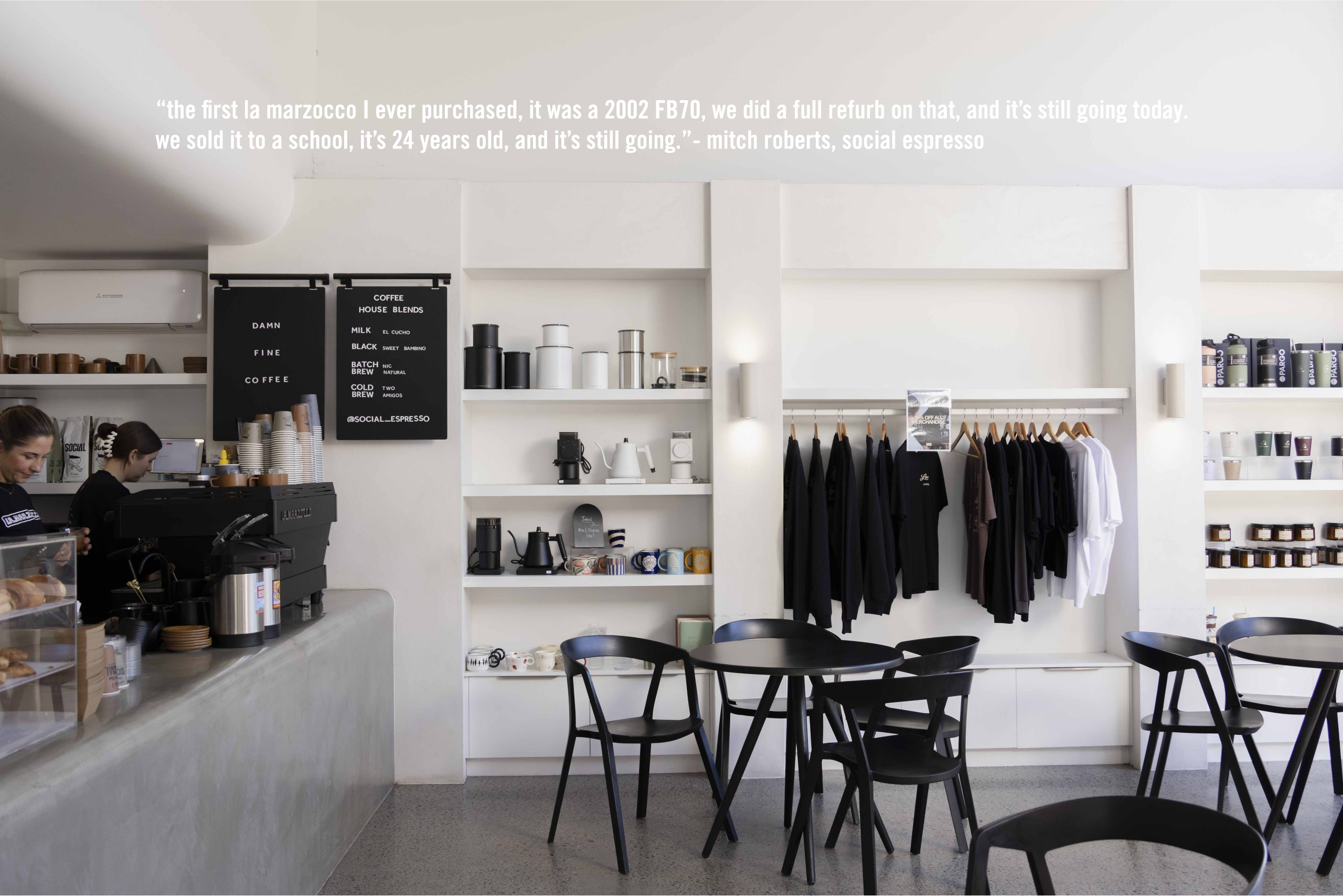
that we wanted to be a part of, and we started purchasing older machines. At the time, I was working with a tech that helped me a lot. When we were together, we would refurb the machines, and I worked out pretty quickly that if you stripped them back and do the right things you can pretty much make them brand new again.
Financially, it’s pretty amazing for a small company to be able to bring them back, refurbish them. During the process of refurbing them, we’re learning so much about the machine itself, too. So we can make mistakes out the back in the workshop, that we learn at the time, and then when we’re out in the road we understand more about the coffee machine.
I think the most surprising one is actually the first La Marzocco I ever purchased, it was a 2002 FB70. We did a full refurb on that, and it’s still going today. We sold it to a school, it’s 24 years old, and it’s still going. That’s pretty solid.
Do you remember the first La Marzocco you worked on?
It would have been when we first moved to the Gold Coast, actually. It was at Commune Café, it was an old Classic, with no shot timers, and at the time we were working with Campos with a dripping recipe, which was the style at the time. I do remember that. I’m pretty sure it was yellow.
How would you describe your café, your community, and the influence the Gold Coast and
your Queensland roots have had on the way you operate?
I think it’s a casual coastal city, we’re pretty laid back here. I’d say we’re casually professional, we like to do business with nice people and we’re very personal here. We do our best to help out, if anyone has any dramas, we’re here in 30 minutes. Everyone knows us. We’re very tight knit, I know it looks big on the map, but everyone knows each other – roasters, coffee technicians, we all work together up here on the Gold Coast which is really nice.
We love living here next to the beach. More than half our customers are situated right on the beach, so it’s not a bad thing to get a call out to fix a coffee machine directly on the beach. Sometimes when the waves are pumping, I might take a bit longer to get back to the factory.
We’re a pretty chill company. We’re very professional but chill at the same time. We make sure things are done right, but in a casual way. No stress.
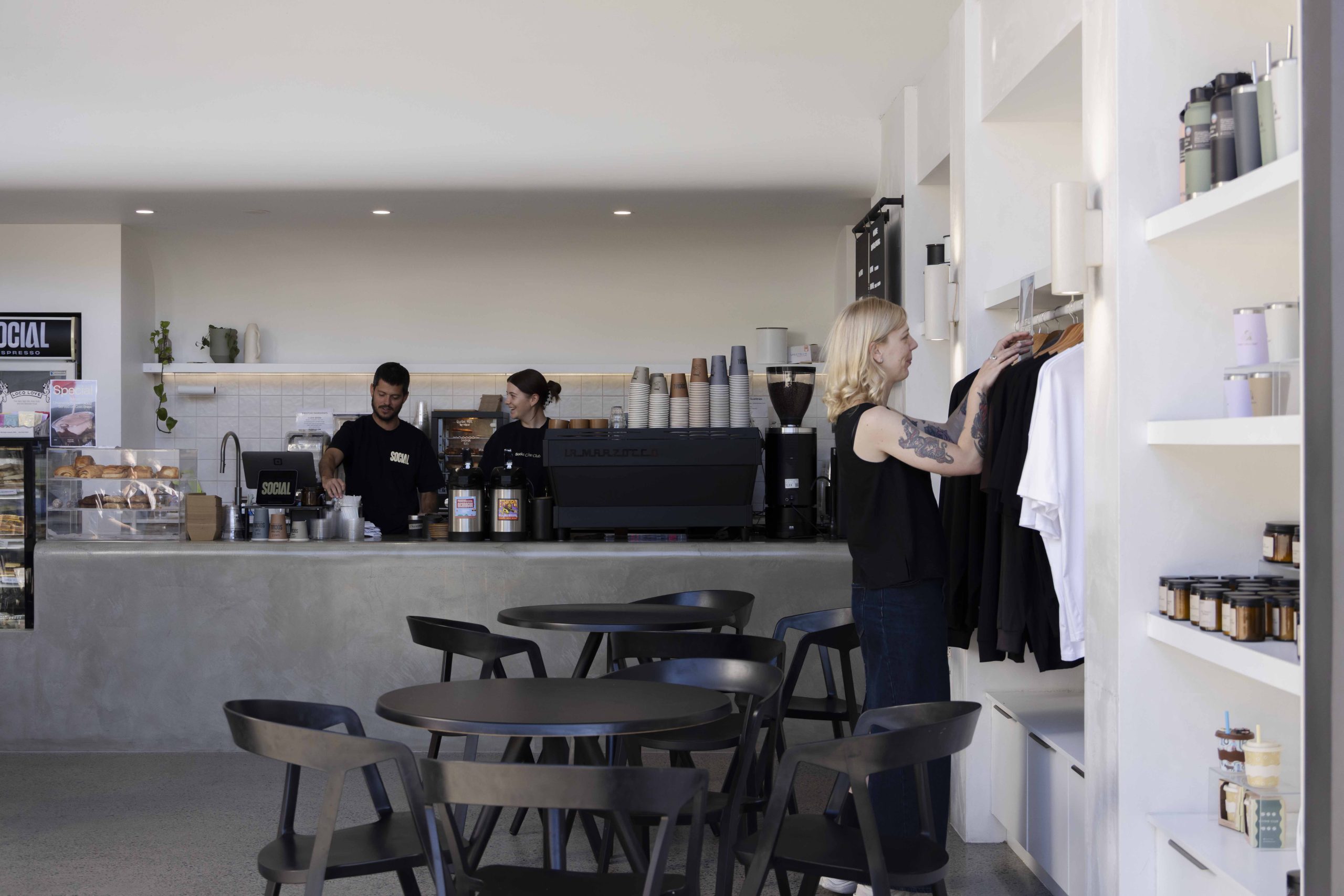
For Social Espresso, sustainability is an ongoing commitment, reflected across the business, from solar power and compostable packaging to the care they put into maintaining and extending the life of their equipment.
Over the years, that care has grown into something they can share. Through refurbishing La Marzocco machines, the team has built a wealth of technical knowledge and hands-on experience, using it to help keep machines performing for longer and support the coffee community around them.
It’s a thoughtful approach to longevity: valuing what has already been built, sharing what has been learned, and helping great equipment continue doing what it was made to do; serve great
coffee for years to come.
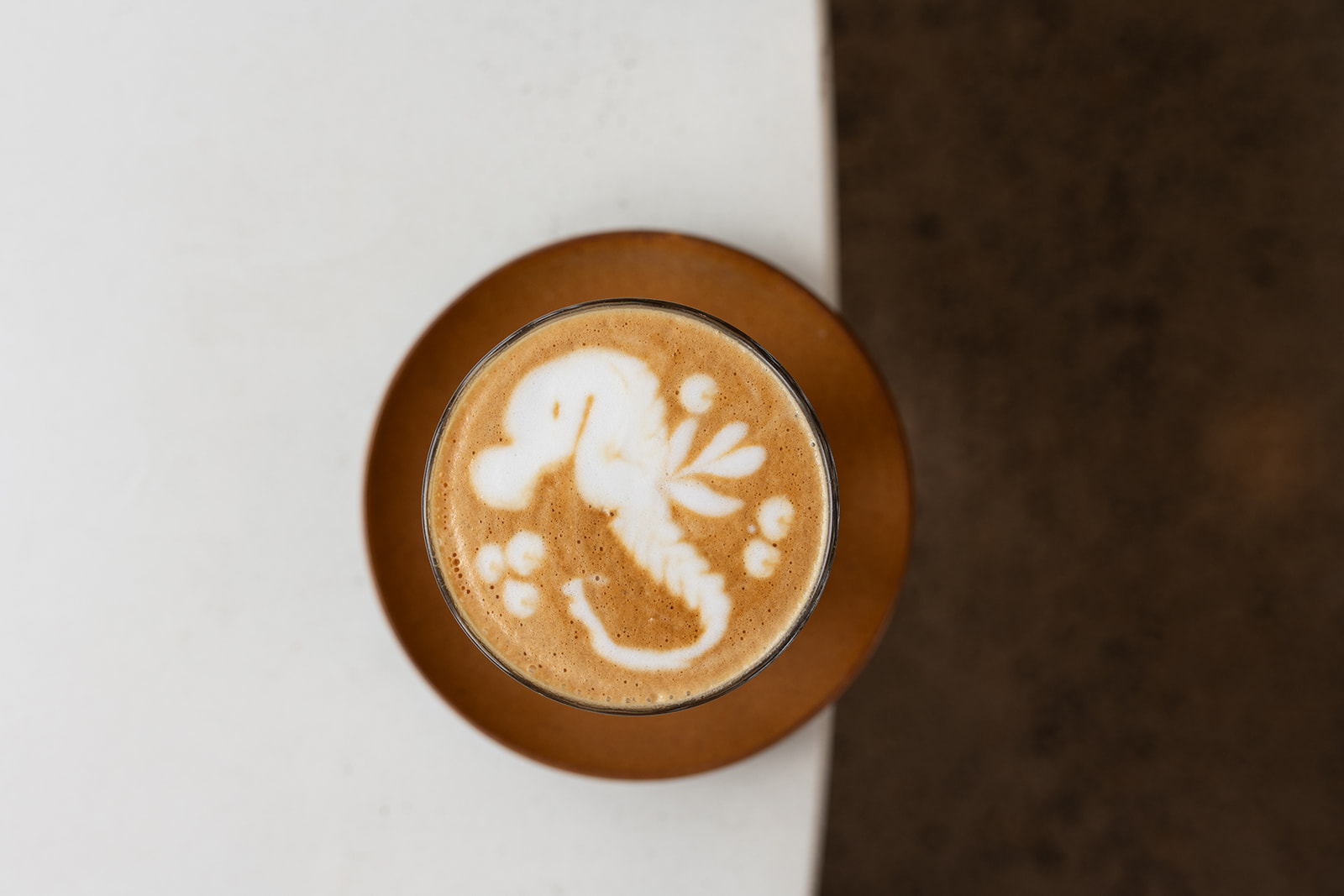
Next time you’re in Burleigh Heads, stop by, grab a coffee and say hello to the team.
Social Espresso
Factory 1/9-11 Fremantle St
Burleigh Heads
QLD 4220
@social_espresso