The true cost of a commercial espresso machine isn’t what you pay for it. It’s what it costs your business over its lifetime
Let’s start with a brave truth: La Marzocco is not always going to be the cheapest espresso machine on the quote.
And we don’t think this conversation should pretend otherwise: For any café, roaster or hospitality business, the initial investment in equipment matters. Budgets are real, margins are under pressure, and every capital purchase needs to earn its place.
Some ‘Total Cost of Ownership’ models suggest that the original purchase price of equipment can represent less than 10% of what is ultimately spent across its working life, with energy, servicing, maintenance, repairs and replacement all contributing to the true cost of ownership.
That is the principle behind ‘Total Cost of Ownership’ (TCO): instead of asking simply, “What does this machine cost?”, ask the bigger question:
“What will this machine cost my business to own, operate and maintain over its useful life, and what value will it continue to return?”
For a commercial espresso machine, that conversation becomes particularly important. This is equipment expected to perform every day, often under significant volume, with the success of a service, and sometimes an entire venue, built around it.
Put simply, every commercial machine effectively has two prices: what it costs to buy and what it costs to run over the next ten, twenty or thirty years. The purchase price is one moment in the life of a machine. Its value is proven every day after that.
Here, we answer some of the most common questions that arise during that decision period. To support you in making the right decision for your business and its longevity/sustainability.
Why does La Marzocco talk so much about “Built to Last” and how do you measure quality?
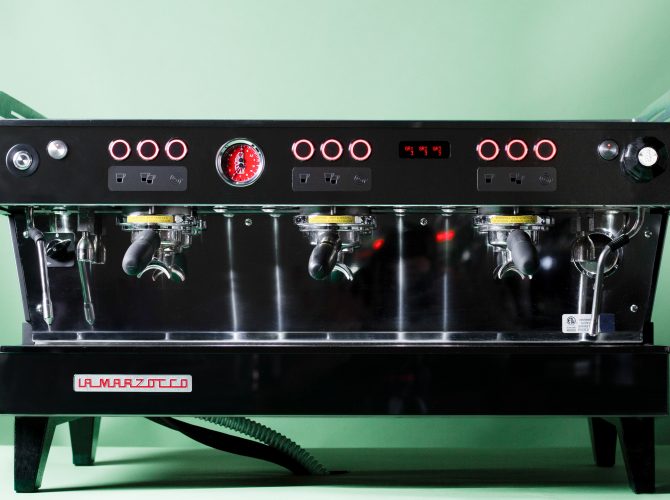
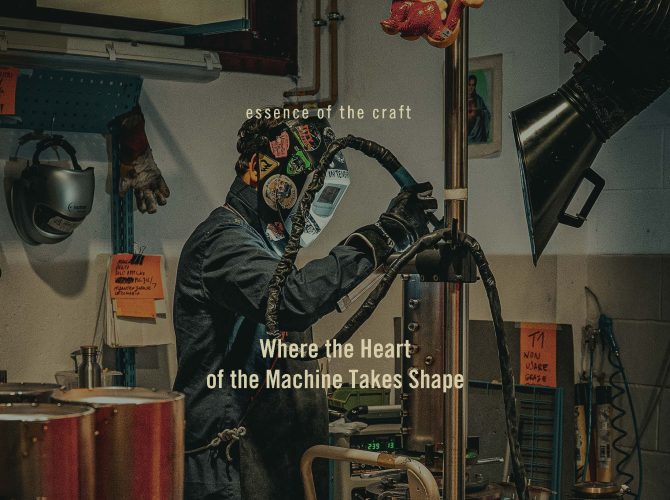
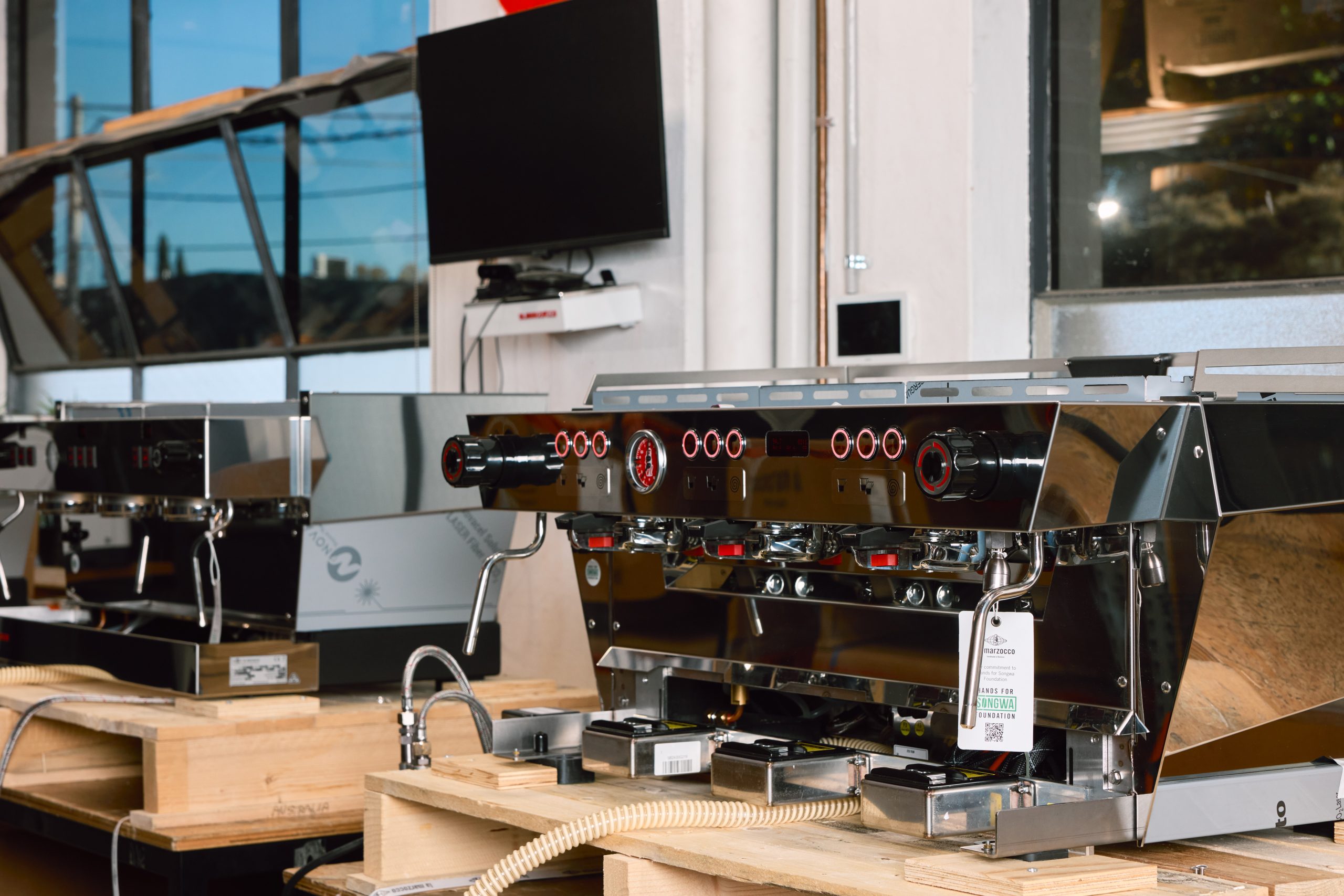
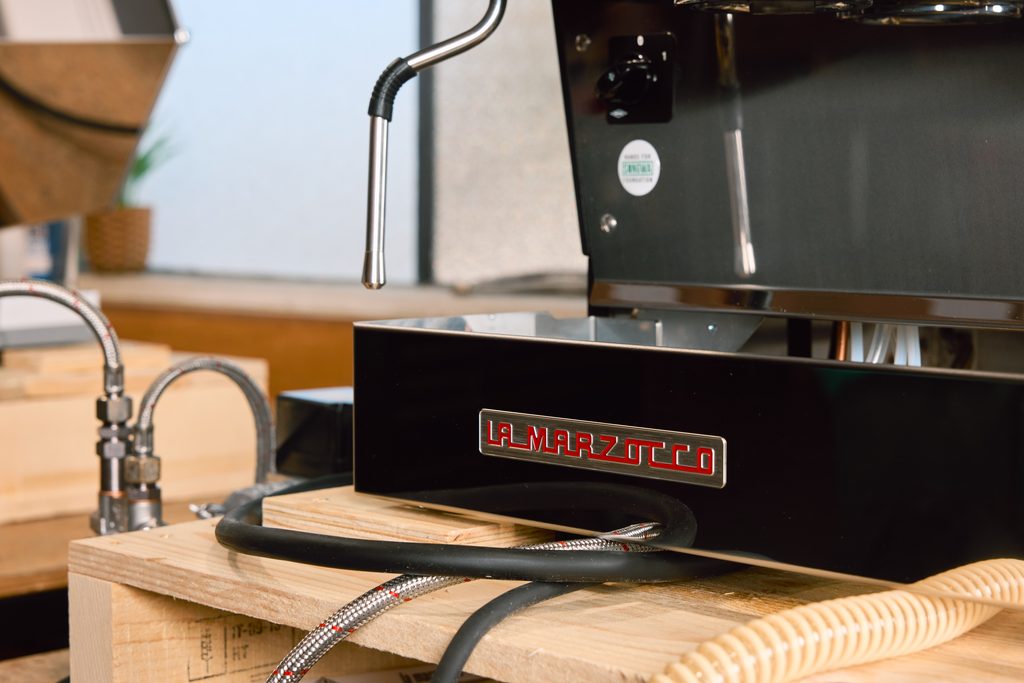
Extending beyond just a philosophy of ‘Built to Last’, commercial La Marzocco espresso machines are handmade and assembled in Scarperia, Italy, and after landing in Australia, they are stringently bench tested before dispatch. That testing matters: the result is that machines leave the Melbourne workshop ready for the demands of a commercial environment.
But longevity isn’t simply about making something strong. It is about making a product with its future life in mind.
A commercial espresso machine will work hard. Components will eventually require attention. Cafés will change hands. Coffee programs will evolve. A roaster may move a machine between wholesale customers. A venue might renovate, expand or close altogether.
So, one of the more meaningful measures of quality is not whether a product will never require work, but whether it has been designed to be maintained, serviced, repaired and ultimately refurbished when it does.
That distinction matters when considering lifetime value.
Built to last doesn’t mean built to never need attention. It means built to be looked after, repaired and put back to work.
View the La Marzocco fleet here
Does buying a La Marzocco go beyond the machine?
Yes. Buying commercial equipment is also buying into the support and infrastructure that sits behind it.
When an espresso machine is central to your ability to trade, downtime has a cost far beyond the technician’s invoice. It can mean slower service, lost coffee sales, frustrated staff and, in the worst circumstances, a café unable to serve its core product.
This is why aftersales support is such an important part of the La Marzocco ownership proposition. The cost of downtime isn’t just the repair. It’s the coffee you couldn’t sell while the machine wasn’t working.
“Our technical support is an integral part of the value built into every La Marzocco. We proudly provide education and maintenance strategies that minimise downtime, preserve reliability, maintain performance, and extend service life to reduce total cost of ownership. This is what helps ensure your investment continues to deliver value day after day.”
Justin Emerson | Head of Technical | La Marzocco
Here in Australia, that ecosystem includes La Marzocco’s commercial aftersales team for technical support and training, and a strong nationwide network of valued and highly qualified technical partners who are readily on-hand. The genuine parts are stocked and ready to order on the dedicated La Marzocco Connect platform, meaning those parts arrive in a matter of hours/days instead of weeks/months.
This infrastructure of servicing, parts, technical knowledge and connectivity safeguards downtime.
“La Marzocco machines are future proofed with firmware updates and new feature compatibility. Particularly now with connectivity, machines can be kept to current new standard throughout their life cycle.”
Brydon Price | Sales Manager & Product Strategy Lead | La Marzocco
Learn more about La Marzocco aftersales support here
How does resale value and refurbishment contribute to a lower Total Cost of Ownership?
Perhaps one of the most overlooked parts of Total Cost of Ownership is what happens at the other end of ownership: Commercial equipment is often discussed as though its value inevitably moves in one direction: down. But a machine designed to be repaired and refurbished can have a very different lifecycle.
A well-maintained La Marzocco can move between venues, be refurbished for another customer, become part of a roaster’s equipment fleet or be resold when the needs of the original business change.
For coffee roasters in particular, this can fundamentally change the economics of equipment ownership.
A machine may outlive the café it was originally installed in or the wholesale relationship it was purchased to support. Rather than reaching the end of its commercial usefulness, it can potentially be refurbished and redeployed to help win or service another account. The internal planning document describes this ability to repurpose equipment as integral to how roasters can realise the full value of their La Marzocco fleet.
There is also a healthy second-hand market for La Marzocco equipment, supported by attributes including familiarity, reliability, commercial throughput and repairability.
It changes the calculation.
Instead of simply:
Purchase price ÷ years owned
the question becomes:
Purchase price + lifetime operating costs – residual value = a much more meaningful picture of what the machine actually cost your business.
A machine that can have a second life carries a very different kind of value from one designed to be replaced.
“In a market sustained by equipment on loan, the quality of second life La Marzocco machines often allows smaller roasters to gain new business. A La Marzocco machine can be installed with full appreciation by a café owner without having to be new to support their business. This has supported the growth and diversity of roasters across the AU specialty coffee market.”
Brydon Price | Sales Manager & Product Strategy Lead | La Marzocco
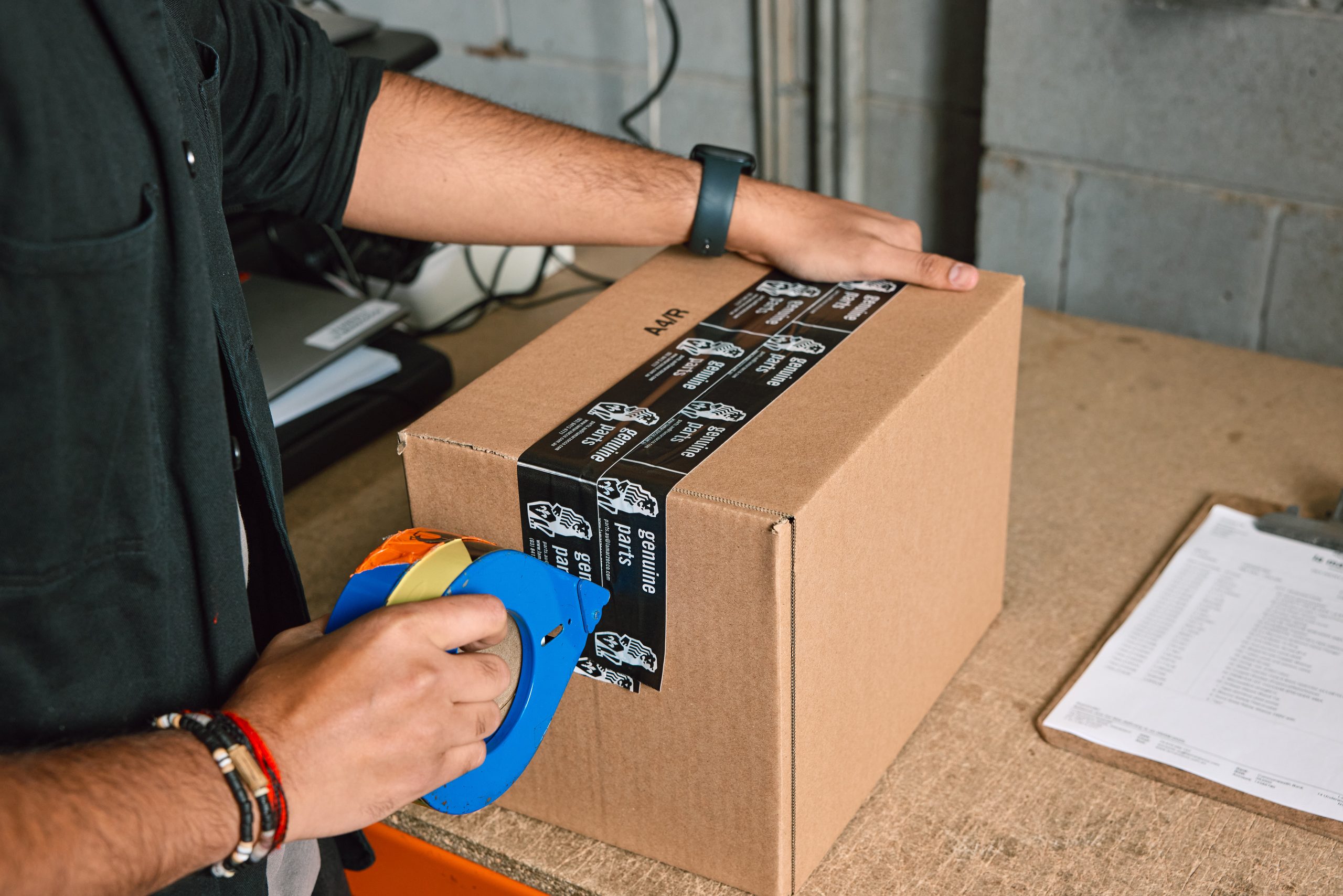
Are parts genuine and easily sourced?
What goes back into a machine over its lifetime matters just as much as what went into it when it was first built.
La Marzocco’s commitment to genuine parts is therefore not simply about maintaining a supply of replacement components, it is about protecting the integrity of the machine as it ages.
The original machine has been engineered as a system. Components are selected and developed by La Marzocco to work together, and the technical information and training offered by the La Marzocco aftersales team helps technicians understand not only how to replace a part, but why that part belongs there.
The combination of genuine parts, skilled technicians, comprehensive training, appropriate servicing and good preventative care, including correct water filtration, can help a machine remain closer to its intended operating standard throughout its life.
When it comes to refurbishment, a refurbished machine is only as good as the work and components that go into rebuilding it. Using genuine parts and appropriately trained technicians helps preserve the performance and reliability that gave the machine value in the first place.
“One of La Marzocco’s greatest attributes is our machinery’s long term reliability and viability. Nothing in our machines is there by accident, a purposeful and thought-out construction means our machines, even as they age, are still producing coffee as good as the day they went in and just as good as newer models.”
Zach Dowse | Operations Manager | La Marzocco
Perhaps one of the clearest example of what long-term parts support means for Total Cost of Ownership is the Linea Classic. More than three decades after its introduction, it demonstrates how designing a machine to be maintained, repaired and supported can fundamentally extend the value of the original investment. And, it’s La Marzocco’s technical partners who witness this first hand.
“The Linea Classic proves that buying a La Marzocco is only the beginning of a long, committed relationship. I struggle to think of any other machine that began life in 1993 and is still fully supported today, with every part needed to keep it running. That is no accident; it’s at the core of what La Marzocco stands for: reliable machines that won’t let you down now, or in thirty years’ time. In an increasingly disposable world, it’s a refreshing approach. And it’s that commitment that keeps the cost of ownership so low.”
Lucio Capoccia | Technico Coffee Services
Learn more about genuine parts and La Marzocco Connect here
How can you tell if second hand/refurbished machine is up to scratch?
Like anything that has had a previous owner, there are some key questions for a buyer to ask ahead of buying second hand/refurbished: Ask for a service history or get the seller to take you through the work performed to bring it up to the current condition. This is your opportunity to look inside which is where the care taken and work done speaks volumes about the quality of the machine. If the machine has been meticulously assessed and reconditioned, it will be a reliable workhorse for years to come.
“A fresh finish tells you how a machine looks. The work beneath the panels reveals how long it will last.”
At Brewtech, our La Marzocco-trained technicians use genuine La Marzocco parts and put every refurbished machine through a thorough testing process, from boiler and wiring inspections to electrical and hydraulic checks. That’s how we give a second-hand machine the care it needs to perform reliably for years to come.”
Georgia Rovacsek | Senior Workshop Technician | Brewtech
Discover the process of a refurbishment here
What should be considered beyond the invoice?
Good businesses should always scrutinise significant capital purchases. But that scrutiny becomes more useful when the conversation moves beyond the invoice.
How long can the equipment realistically remain in commercial service?
- How readily can it be serviced?
- Are parts available?
- Who will support it when something goes wrong?
- How much downtime can the business tolerate?
- Can it be repaired rather than replaced?
- Could it be refurbished?
- Does it retain meaningful value if the needs of the business change?
- And, most importantly, can you rely on it to perform the job you bought it to do?
These questions paint a more complete picture of cost.
For La Marzocco, the proposition isn’t that investing in a premium commercial espresso machine magically removes maintenance, servicing or operating expenses. A hard-working piece of commercial equipment needs to be looked after.
The proposition is that a machine designed for longevity, backed by technical support, genuine parts and a pathway to repair, refurbishment and resale makes strong commercial sense over the long term.
That is where ‘Built to Last. Supported for Life’. becomes more than a brand promise.
It becomes a way of thinking about investment.
Because the best-value machine isn’t necessarily the one that costs the least on day one; it is the one that continues earning its place in your business, year after year.
Discover more about the people, expertise, parts and nationwide technical network supporting La Marzocco machines throughout their working life:
Read more here
Discover more here
Reach out here